
Replacing meat protein is a kitchen problem before it is a nutrition problem: something has to do the job the meat was doing in the dish. This guide goes through the frozen cases we ship from Brooklyn and what each one replaces at breakfast, lunch and dinner, how to size an order for a week, and where to read the one number we will not print for you.
← All guidesBuyer guide
Foods to Replace Meat Protein
Which frozen foods replace meat protein in everyday cooking, how each case is packed, what the panel on the case tells you, and the $300 minimum.
Which foods replace meat protein in a frozen kitchen?
The practical answer is frozen formats that cook like the meat they stand in for, plus legume-based items such as falafel. In this catalog that is twenty-seven cases, from loose crumbles to breaded cutlets to composed dishes that heat as a tray. What makes them workable as replacements is not a claim on the box: it is that they drop into recipes you already run, with the same portion logic you already use.
- Loose crumbles for anything that starts with browned ground meat
- Breaded cutlets, patties and nuggets for a center-of-plate portion
- Strips and diced formats for stir-fries, wraps, salads and grain bowls
- Franks, burgers and breakfast sausage patties for griddle and grill service
- Falafel balls for mezze plates, pitas and lunch bowls
- Composed dishes when the whole plate, not one ingredient, is the replacement
How do you swap meat protein one for one?
Swap by weight for loose formats and by piece for formed ones. A pound of crumble takes the place of a pound of ground meat in a sauce, a chili or a filling, and the rest of the recipe does not change. A cutlet replaces a cutlet and a frank replaces a frank, so your portion count and your plate cost per serving stay where they were. The one thing that does change is heating: go by the instructions on the case instead of the raw-meat timing you know by heart.
Where do you find the protein number for each case?
On the nutrition panel printed on the case, and nowhere else, including here. We do not publish protein grams, allergen claims or certifications for these products, because formulations are revised between production runs and the panel that arrives with your order is the only accurate version. If protein content is driving the decision, ask for the current panel before you order: call 347-516-9806 or write tarcus@vegangrandnews.com.
What replaces meat protein at breakfast, lunch and dinner?
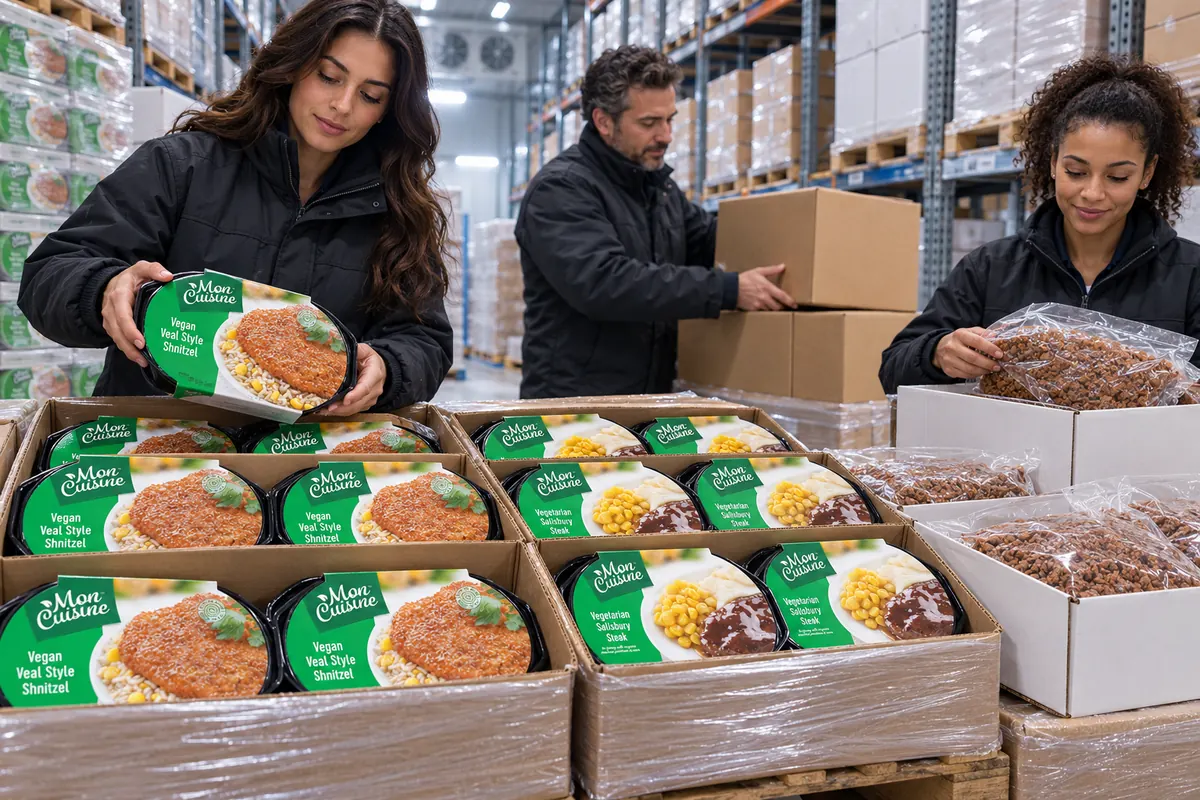
Different formats, same logic: the replacement has to fit the slot in the day. Breakfast is sausage patties on a sandwich or crumble in a hash. Lunch is strips, diced pieces or falafel in a wrap, bowl or salad. Dinner is a center-of-plate item or a composed dish, which is where the Mon Cuisine trays earn their freezer space.
- Breakfast: vegan breakfast sausage patties, or crumble in a hash
- Lunch: vegan chicken strips, diced chicken, falafel balls, veggie burgers
- Dinner: veal-style shnitzel, Salisbury steak, meatballs, chicken-style pot pies
- Family dinner from one tray: stuffed cabbage, moussaka, stuffed shell pasta
- Shared plates and snacks: nuggets, and pizza crumbles over flatbread
How much should you order for a week?
Count the meals first, then convert to cases. For a kitchen, multiply the covers you expect for each dish by the portion weight you already use for meat. For a household, count dinners and allow one portion per person per dinner. Both end at the same question: how many cases is that, given the pack count printed on the case. Two to four cases is the usual shape of a first order, because the $300 minimum is easier to reach with a spread of formats than with one item ordered deep.
Which replacements work in a kosher kitchen?
The twelve Mon Cuisine cases, which carry the Kosher Parve marking printed on the case. The other fifteen cases in the catalog are bulk foodservice packs that do not declare it, so a kosher kitchen builds its order inside the Mon Cuisine line and confirms the marking on arrival. Both halves travel in the same delivery out of Brooklyn, so a mixed household can order across the whole catalog in one go.
What does buying by the case commit you to?
Freezer space and one format for a few weeks, which is the real difference between a case and a supermarket bag. A case costs less per portion and it is also a decision you live with, so the first one should be something that fits into more than one dish. Everything below is the short version of what to settle before you order.
- Plan a shelf per case: loose bags flex around other food, trays do not
- Keep every case frozen until you cook it, and heat by the case label
- $300 order minimum, the same for wholesale accounts and households
- Delivery zones, or pickup from 1810 76th Street, Brooklyn NY 11214
- Call 347-516-9806 for current availability and pack counts
Before you order
Heating instructions, allergen information and certifications are printed on the case label. Always follow the label for the lot you receive: formulations and pack specifications can change between production runs.
What are the main alternative proteins to meat?
The main alternative proteins to meat are legumes, soy, wheat and the plant-based products made from them. Beans, lentils and chickpeas are eaten whole or ground; tofu and tempeh are made from soybeans; seitan is made from the protein in wheat flour; and formed products such as crumbles, patties and nuggets are built from one or more of these sources. The ingredient panel on each case names the protein sources that item uses.
- Legumes: beans, lentils, chickpeas and peas, cooked whole or ground
- Soy: tofu, tempeh and textured soy protein
- Wheat: seitan and some formed products
- Formed plant-based products: crumbles, patties, nuggets, cutlets and sausages made from the sources above
- Eggs and dairy: protein sources for vegetarians who eat them, but not part of a vegan diet
Which protein substitutes come frozen and ready to use?
Formed plant-based items do: they arrive frozen in a fixed shape and go from the freezer to the heat following the label, with no soaking, pressing or seasoning from scratch. In the Vegan Grandnews catalog that covers crumbles, strips, diced chicken, burgers, breaded cutlets and nuggets, meatballs, franks, sausage patties and falafel balls, all sold frozen by the case.
- Crumbles (Vegan Ground Beef Crumble, Mon Cuisine Vegan Meat Crumble): sauces, tacos, bowls
- Vegan Chicken Strips and Vegan Diced Chicken: salads, wraps, stir-fries
- Burgers and patties: sandwiches and plates
- Vegan Meatball and Vegan Falafel Balls: pasta, pitas, platters
- Breaded cutlets, shnitzel and nuggets: center of plate or kids' plates
How do you compare protein between meat substitutes?
Read the nutrition panel on each case and compare protein at the same weight. Serving sizes differ between products, so convert both to the same number of grams using the serving weight printed on the panel. Values also change between production runs, so a figure quoted in an article or on another site may not match the case you receive.
What are the alternative proteins to meat?
The main alternative proteins to meat are soy, seitan made from wheat protein, peas, and other legumes such as chickpeas, lentils and beans. Frozen meat alternatives take one or more of those plant proteins and form them into a familiar shape, such as a crumble, nugget, strip or frank.
- Soy: tofu, tempeh and textured soy protein, a common base for crumbles and formed products
- Seitan, made from wheat protein: dense and chewy, used for sliceable, cutlet-style textures
- Pea protein: a base in many newer formed products
- Chickpeas and fava beans: the traditional base of falafel
- Lentils and beans: cooked whole into stews, fillings and bean patties
- Formed frozen products: crumbles, nuggets, strips, meatballs and franks built from the proteins above
The ingredient list on each case says which base it uses. Read it on the case you receive rather than assuming, because two products that look alike can be built on different proteins.
Is a protein substitute the same as a meat alternative?
Not quite. A protein substitute is any food that supplies protein in place of meat, from a bowl of lentils to a block of tofu. A meat alternative is narrower: a product made to take meat's place on the plate, with a similar shape and use, such as a crumble for ground beef or a strip for sliced chicken.
Every case in this catalog is a meat alternative in that narrow sense. Each one replaces the meat in a dish without changing the rest of the recipe. That is why kitchens use them: the menu stays the same, and only one line on the order changes. A household gets the same benefit, keeping family recipes and swapping only the protein.
How do you compare protein between meat alternatives?
Compare them on the Nutrition Facts panel, setting grams of protein against the serving weight in grams. Serving sizes differ between products, so grams per serving alone can make a small serving look weak or a large one look strong. Working out protein per 100 grams puts every product on the same scale.
- Read grams of protein and the serving size in grams from the Nutrition Facts panel
- Divide the protein by the serving weight and multiply by 100 to compare products on one scale
- Check the ingredient list to see which protein base the product uses
- Compare the case you actually received, since formulations change between production runs
Products covered in this guide
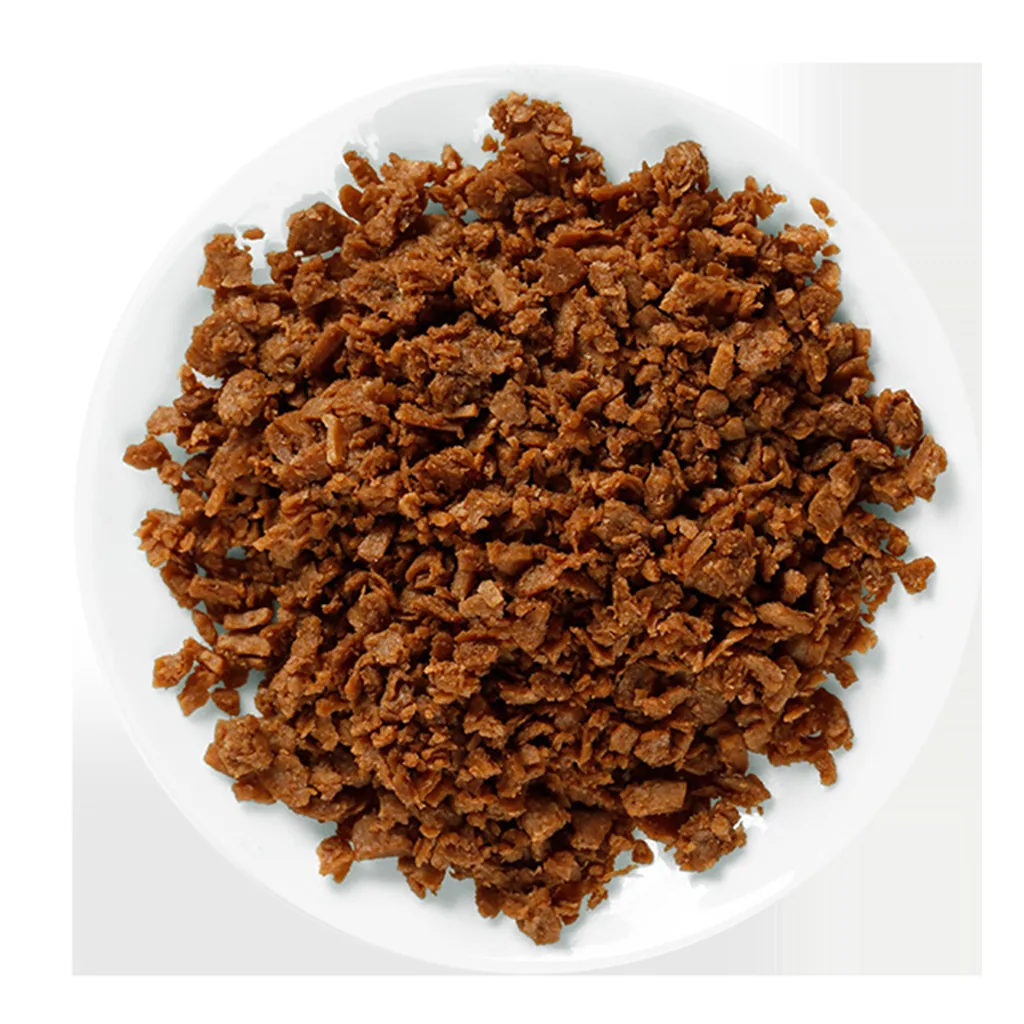 Vegan Ground Beef Crumble12 / 1 LB$50.00
 Vegan Chicken Strips10 LB$62.00
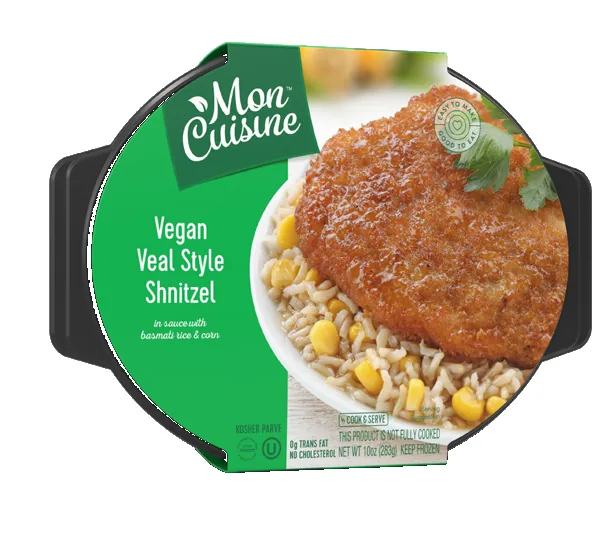 Vegan Veal Style Shnitzel10 oz (283g)$24.00
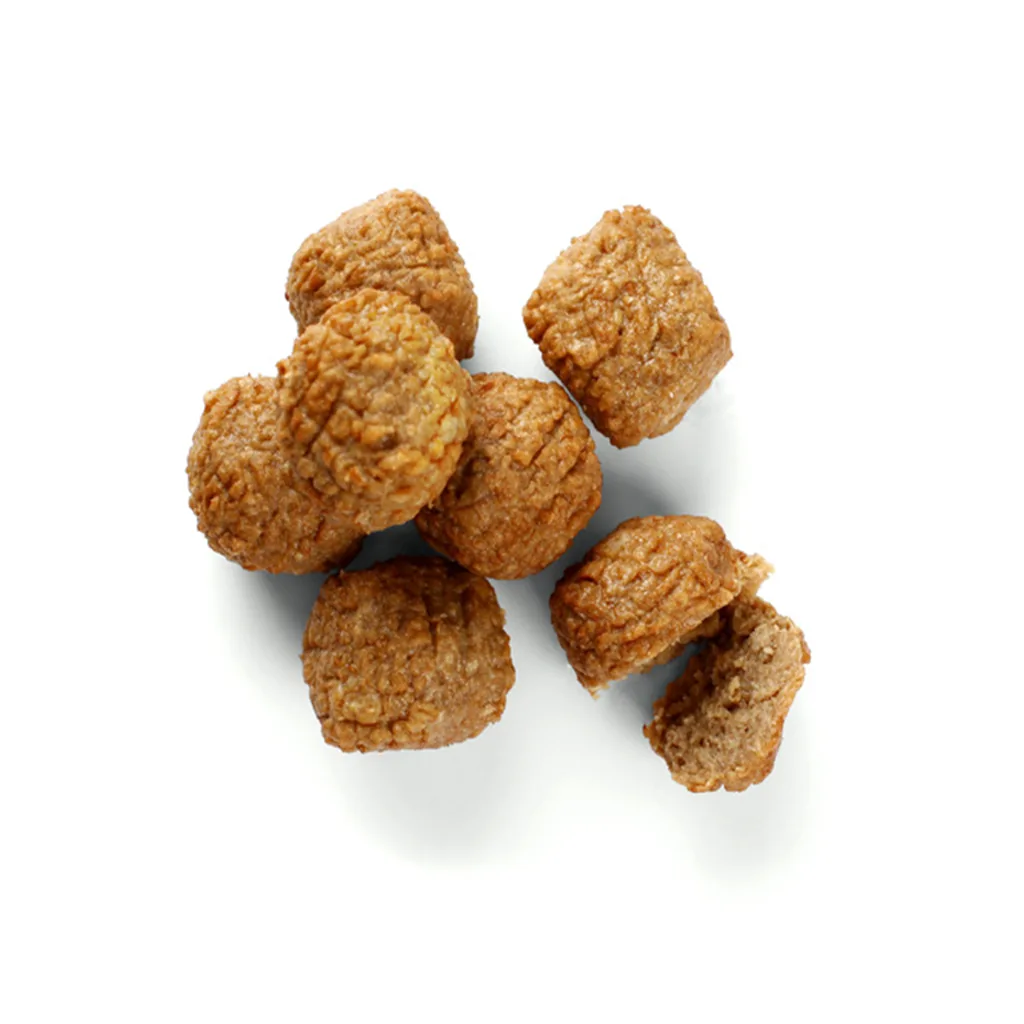 Vegan Falafel Balls160 / 1 oz$55.00
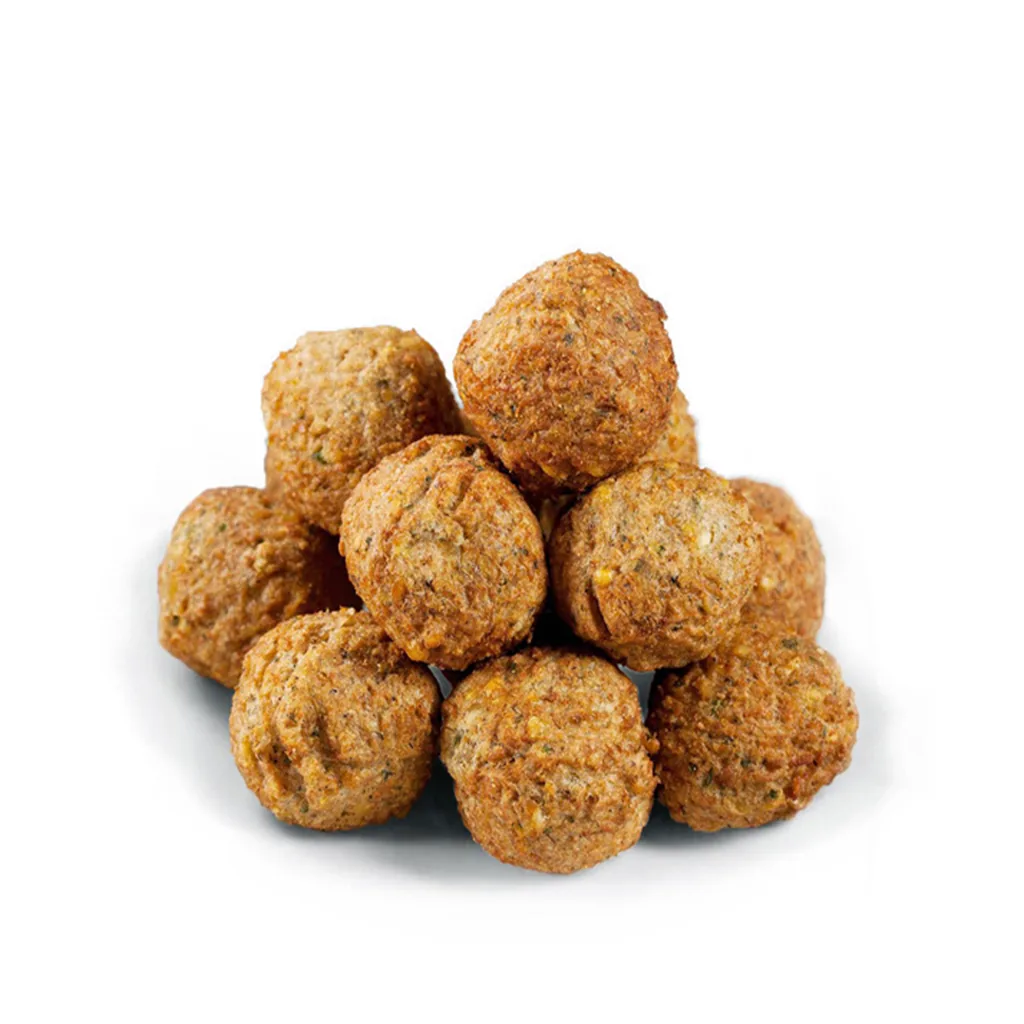 Vegan Meatball160 / 1 oz$62.00
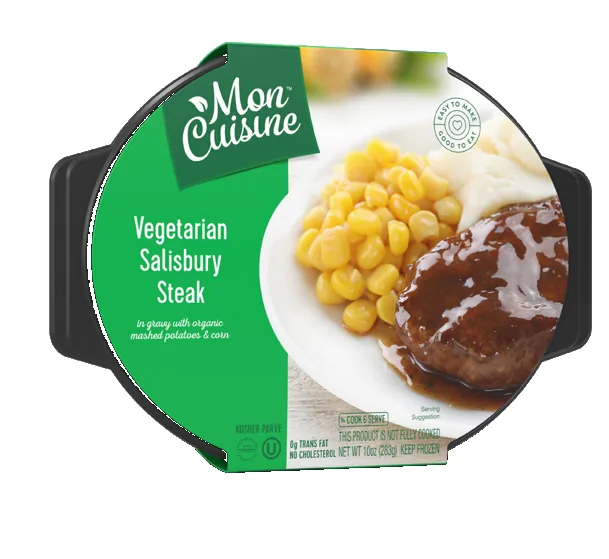 Vegetarian Salisbury Steak10 oz (283g)$24.00
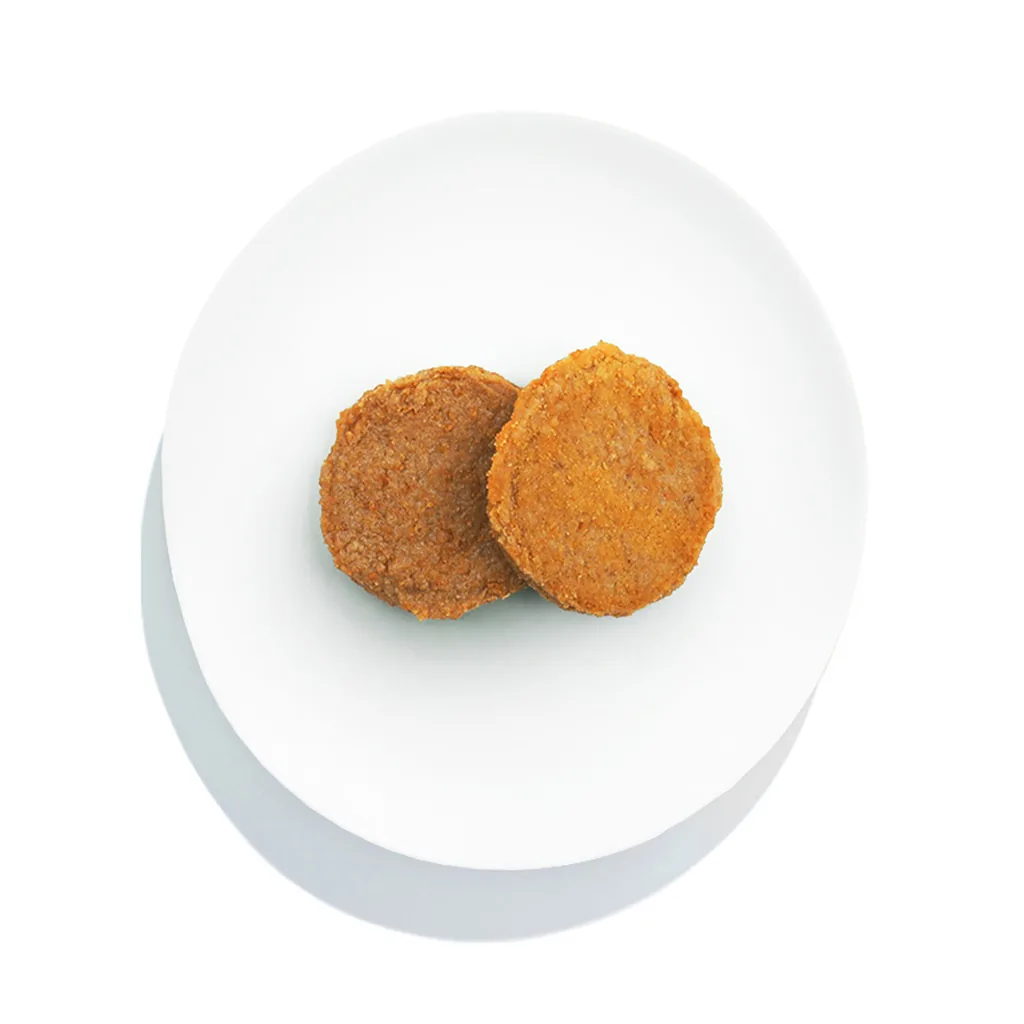 Fully Cooked Vegan I.Q.F. Vegan Breakfast Sausage Patties112 / 1.5 oz$62.00
 Fully Cooked I.Q.F. Veggie Burger48 / 3.2 oz$62.00
Wholesale and direct orders are mix-and-match, with a $300 minimum across the catalog.
Frequently asked questions
- What is the highest protein food to replace meat?
- We do not publish a ranking, because the protein figure comes from the panel printed on each case and panels are revised between production runs. Ask us for the current panel on the cases you are considering and compare those, rather than a number copied from a web page.
- Can you replace meat protein without soy?
- The ingredient panel printed on the case is the only place to confirm what any of these products are made from, and we do not publish free-from or allergen claims. Falafel is a chickpea recipe by definition, but still check the panel on the case you receive.
- Do frozen meat replacements need to be thawed first?
- Keep them frozen until you cook them. Loose formats let you scoop what a recipe needs and leave the rest of the bag frozen, and the heating instructions on the case tell you how to take it from there.
- Can a household buy these by the case?
- Yes. Households order from the same catalog as restaurants and groceries, under the same $300 minimum, with delivery from Brooklyn or pickup at 1810 76th Street, Brooklyn NY 11214.
- What are alternative proteins to meat?
- Legumes, soy foods such as tofu and tempeh, seitan made from wheat, and plant-based products built from them, such as crumbles, burgers and nuggets. Eggs and dairy also supply protein for vegetarians who eat them.
- Where can I buy protein substitutes by the case in New York?
- Vegan Grandnews sells frozen plant-based protein substitutes by the case from 1810 76th Street in Brooklyn, with a $300 minimum per order and delivery across New York City, Long Island, New Jersey and Connecticut.
- What are the main alternative proteins to meat?
- Soy (tofu, tempeh and textured soy protein), seitan made from wheat protein, pea protein, and legumes such as chickpeas, lentils and beans. Frozen meat alternatives shape these into crumbles, nuggets, strips or franks, and the ingredient list on the case names the base.
- Is a protein substitute the same as a meat alternative?
- No. A protein substitute is any food that provides protein in place of meat, such as lentils or tofu. A meat alternative is a product made to replace meat in a dish with a similar shape and use, like a crumble for ground beef.
- How do I find the protein content of a frozen meat alternative?
- Read the Nutrition Facts panel on the case. To compare products fairly, divide grams of protein by the serving weight and multiply by 100. Use the case you received, because formulations change between production runs.